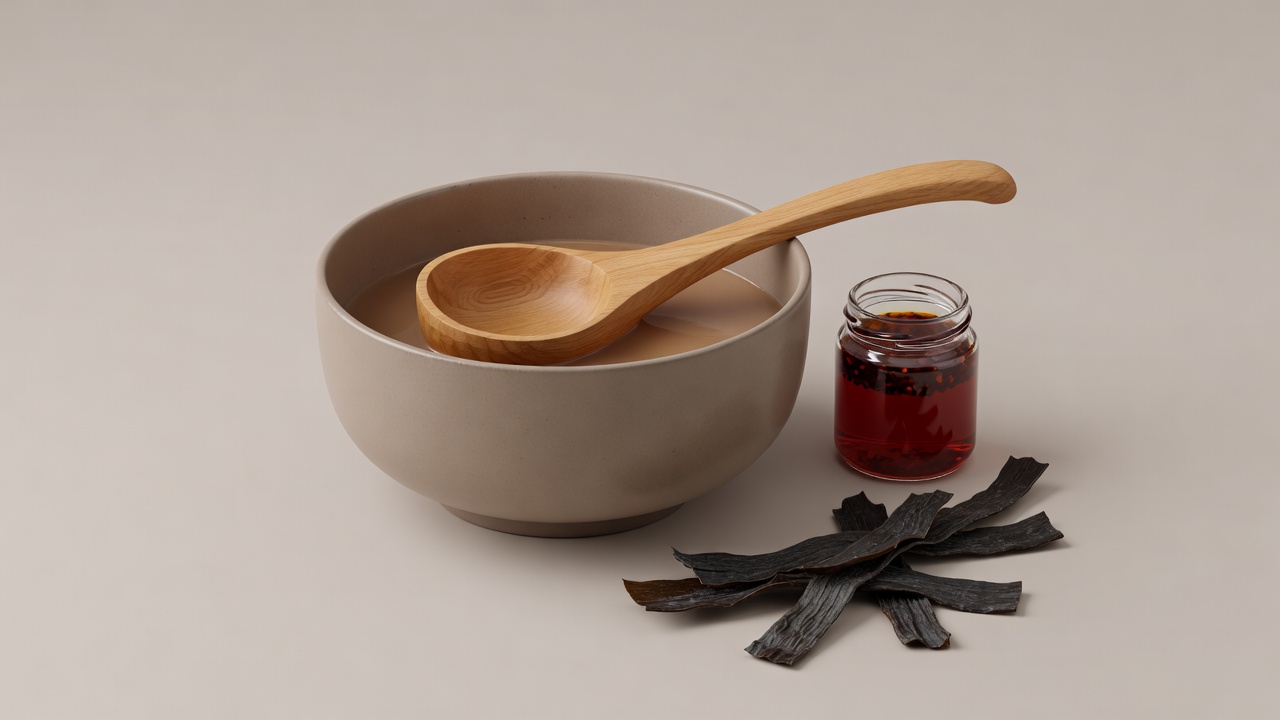
Ask a seasoned noodle-house chef like Ivan Orkin how to assemble a memorable bowl and the first answer is almost always structural: never season the main stockpot. When salt, soy sauce, or delicate aromatics boil for hours in a forty-litre kettle, bright top notes evaporate and salinity climbs unpredictably as water reduces. Instead, skilled kitchens keep four elements separate until the final twenty seconds—stock, seasoning base (tare), aromatic oil, and hot drained noodles—marrying them inside a pre-warmed ceramic bowl.
Clear Broths vs. Emulsified Stocks
Temperature decides clarity. Hold a pot of roasted chicken bones, dried shiitake, or charred ginger and star anise just below a simmer—around 85 °C to 92 °C—and proteins coagulate gently into a clean raft that you can skim away. The finished broth shines amber and weightless, ideal for delicate rice ribbons, wonton noodles, or hand-cut wheat strands whose wheaty perfume you want to taste clearly.
Turn the burner to a vigorous rolling boil with collagen-rich pork trotters or chicken feet, and violent convection shears rendered fat into microscopic droplets suspended in gelatin-rich liquid. That creamy, opaque emulsion coats thin, straight low-hydration noodles cleanly, delivering body without flour thickeners. Both styles have their place, yet each demands a different noodle surface: wavy or hand-massaged strands capture thin clear soups inside their curves, while taut straight noodles cut neatly through rich emulsified broth.
The Role of Tare, Fat, and Bright Acidity
Seasoning bases deliver concentrated umami through layered amino acids and nucleotides. Combining glutamate-rich kombu kelp or fermented soy sauce with inosinate-rich dried fish or guanylate-rich dried shiitake creates a savoury resonance far fuller than salt alone. One tablespoon of tare at the bottom of a bowl can transform mild stock into shoyu, shio, or miso profiles without changing the main kettle.
Aromatic oil sits on top of broth for two practical reasons: it insulates heat so the final sip stays warm, and it carries fat-soluble aromas—scallion greens fried slowly in neutral oil, toasted white sesame oil, or Sichuan chili oil bloomed over star anise and black cardamom—straight onto the noodles as chopsticks lift them out of the bowl. Finally, a sharp counterweight such as aged Zhenjiang black vinegar, pickled mustard stems (ya cai), or a twist of yuzu peel keeps rich bowls lively from first bite to last.
| Noodle Profile | Ideal Liquid Style | Key Finishing Fat | Counterbalance |
|---|---|---|---|
| Thin straight alkaline | Rich emulsified broth or light clear stock | Scallion oil or toasted sesame oil | Pickled ginger or white pepper |
| Thick wavy wheat | Fermented miso or soy-dashi soup | Garlic-infused oil or brown butter | Shredded scallions & chili threads |
| Wide hand-stretched belts | Dry-tossed emulsion (minimal liquid) | Hot bloomed chili-garlic oil | Aged black vinegar & crisp greens |
| Buckwheat soba | Concentrated cold or hot dipping tsuyu | None (keep clean) | Freshly grated wasabi & sliced negi |
Clear Base Formula · Makes 1.2 Litres
Overnight Kombu & Dried Shiitake Clear Broth
A deeply savoury, fully plant-based clear stock that anchors delicate hand-cut wheat noodles or chilled summer dipping sauces without cloudiness.
Ingredients
- 1,250 ml cold filtered water
- 20 g dried Rishiri or Rausu kombu, wiped gently with a dry cloth
- 25 g dried whole shiitake mushrooms, rinsed briefly
- 30 g fresh ginger, thinly sliced
- 30 ml naturally brewed soy sauce, for bowl seasoning
- 15 ml mirin, simmered 1 minute to soften alcohol
Method
- Cold steep: Place the kombu and dried shiitake in cold water inside a covered pitcher and refrigerate 10 to 12 hours to extract clean glutamates without bitterness.
- Gentle heat: Transfer the steeped liquid, kelp, mushrooms, and ginger to a saucepan. Warm slowly over medium-low heat until tiny bubbles ring the edge (about 75 °C), then lift out the kombu before boiling.
- Low simmer: Hold the mushrooms and ginger at a quiet 88 °C simmer for 18 minutes, then strain through a fine-mesh sieve.
- Season in the bowl: Divide the soy sauce and mirin across four warmed bowls, ladle 280 ml of hot clear broth into each, and add freshly boiled noodles immediately.
Dry-Tossed Dressing · Serves 4
Toasted Sesame & Fragrant Chili Oil Base
Built for wide ribbons or 38% hydration hand-cut wheat noodles, using starchy noodle cooking water to turn thick sesame paste into a glossy ribbon coating.
Ingredients
- 45 g roasted Chinese sesame paste (or tahini + 1 tsp toasted sesame oil)
- 30 ml light soy sauce
- 20 ml Zhenjiang black vinegar
- 30 ml sediment-rich chili oil with toasted flakes
- 1 clove garlic, finely grated
- 60 ml hot starchy noodle cooking water
Method
- Loosen the paste: Whisk the sesame paste with soy sauce and black vinegar in a large mixing bowl; it will tighten first, then turn smooth.
- Emulsify with starch water: Whisk in the hot noodle cooking water a spoonful at a time until the sauce pours like light cream.
- Fold aromatics: Stir in grated garlic and chili oil, drop freshly drained hot noodles directly into the bowl, and toss briskly so every strand coats evenly.
Read the Dining Room
How modern noodle houses turn ninety seconds of craft into hospitality
Once dough and broth are balanced, timing and room design take over. Step inside the contemporary noodle bar.
Read the room of a noodle house