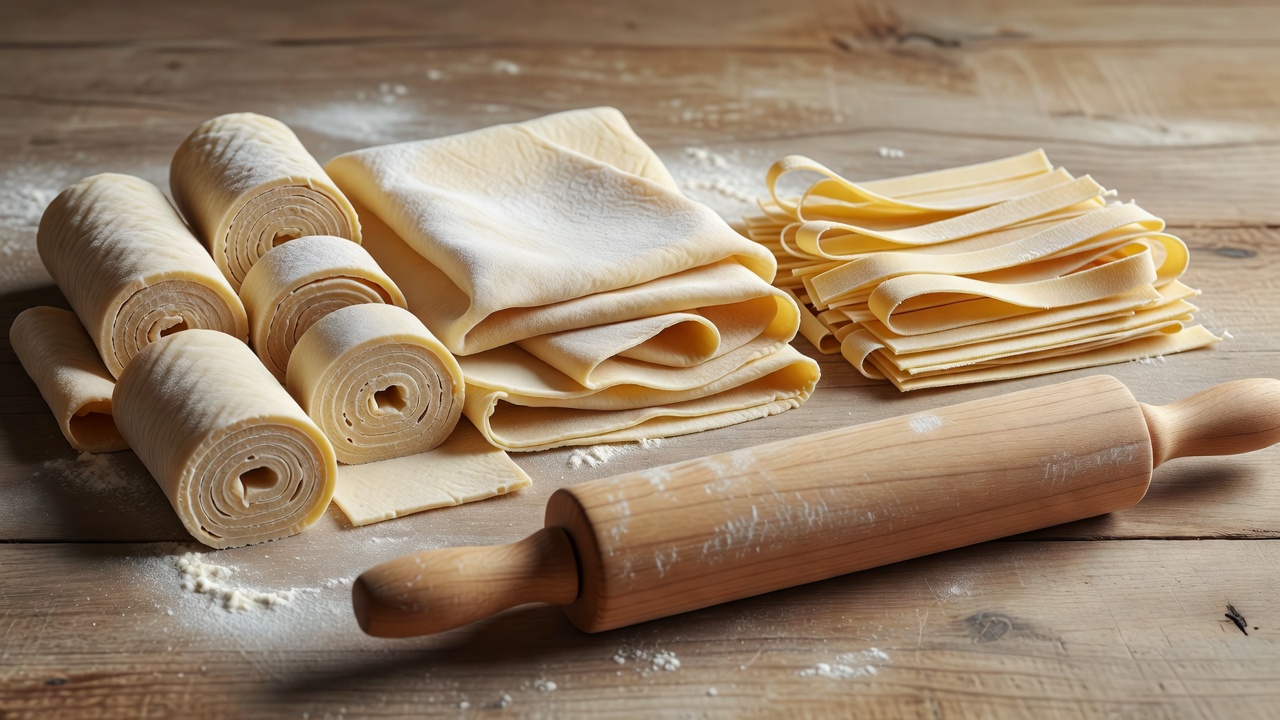
Every experienced noodle maker watches the mixing bowl like a barometer. Humidity in an August kitchen versus a dry January afternoon can shift flour absorption by three percent—enough to turn a crisp alkaline noodle dough into a sticky sheet that clings to steel rollers. As food scientist Harold McGee documents in On Food and Cooking, wheat flour is roughly seventy percent starch and ten to fourteen percent protein. The moment water touches those dry particles, two proteins—gliadin for stretch and glutenin for snap—begin knitting into an elastic web.
Reading Hydration Percentages by Touch
Bakers think in percentages relative to flour weight, and noodle makers gain instant clarity by doing the same. A 34% hydration dough, common in Fukuoka's Hakata-style ramen shops, never looks smooth in a bowl; it resembles damp sand that only bonds under the pressure of repeated laminating passes through a heavy pasta or noodle machine. Step up to 42% hydration and the dough becomes hand-kneadable with firm palm pressure, yielding springy knife-cut wheat noodles that hold their own in simmering soup.
Between 45% and 48% hydration lies the territory of Kagawa's Sanuki udon—dough traditionally wrapped in clean cloth and pressed with foot weight to build a dense, bouncy chew known in Japanese as koshi. Push past 55% hydration, as Lanzhou's hand-pulled lamian artisans do, and the dough softens into a glossy, slack ribbon that elongates under gravity alone when swung between outstretched arms.
| Hydration Band | Typical Flour & Additives | Tactile Feel | Best Shaping Method |
|---|---|---|---|
| 32%–36% | Bread flour + 1% kansui | Shaggy crumbs, firm under thumb | Roller sheeting & mechanical cutting |
| 38%–43% | All-purpose or bread flour + 2% salt | Taut, matte, resists tearing | Hand rolling, folding & knife cutting |
| 45%–50% | Medium-protein wheat + 3%–4% salt | Supple, velvety, springs back slowly | Foot-pressed or heavy pin rolling |
| 55%–62% | High-gluten wheat + weak alkali or oil | Silky, extensible, drapes smoothly | Hand pulling or oil-rested belt stretching |
Why Salt and Alkali Transform Bite
Plain table salt does far more than season wheat dough. Sodium chloride tightens gluten bonds, slows enzyme softening during long rests, and helps water disperse evenly through starch granules. Udon makers adjust brine strength with the seasons—closer to four percent salt in winter and five percent in warm summer kitchens—to preserve firm bite.
Alkaline salts, called kansui in Japan and jianshui in China, shift the dough's pH upward. Sodium carbonate and potassium carbonate interact with natural flavonoid pigments in wheat flour, turning ivory dough into warm pale gold while inhibiting starch gelatinisation on the noodle's exterior. That is why a bowl of Cantonese wonton noodles or Sapporo ramen stays resilient and slightly snappy even after five minutes in piping hot stock.
The Two-Rest Rule for Home Counters
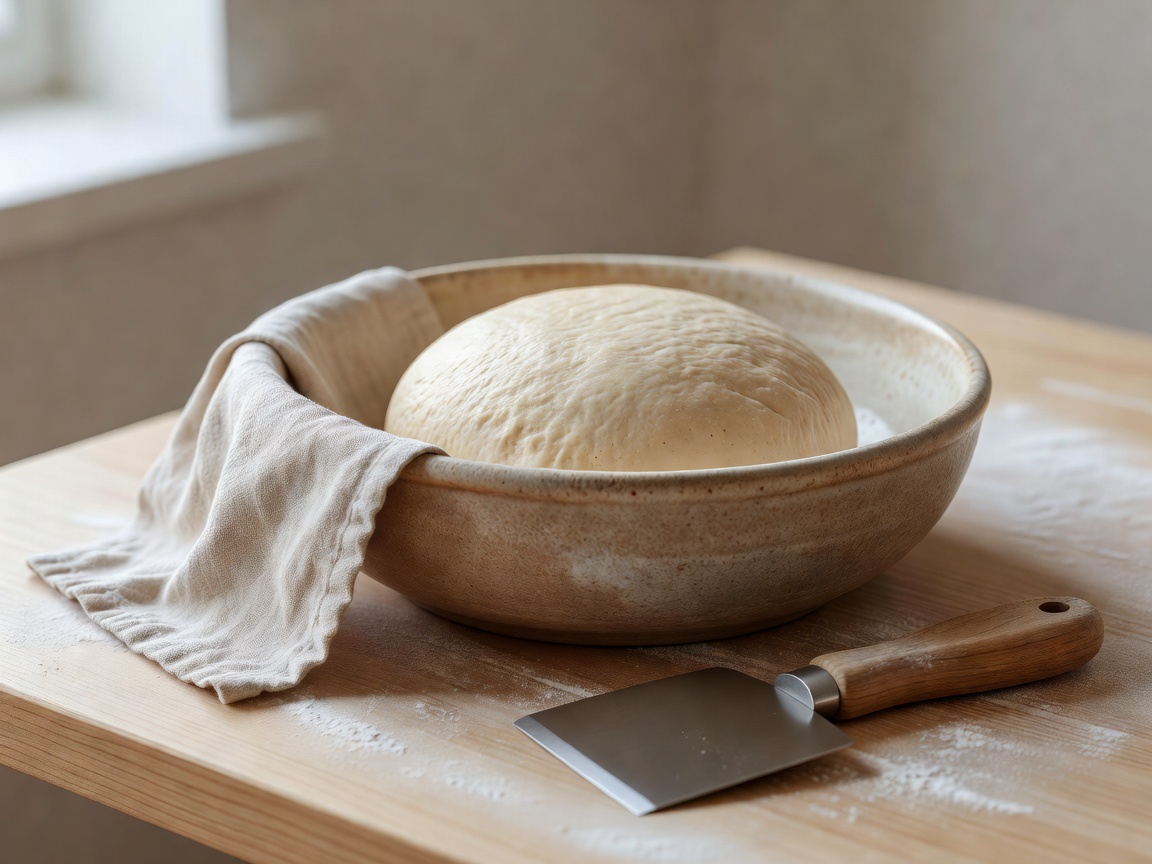
Fighting tight dough with a rolling pin is the fastest way to tear an edge and sour a Sunday afternoon. When a rolled sheet immediately snaps back toward the centre, the gluten network is simply coiled tight. Covering the dough airtight for thirty minutes lets stressed protein chains unwind without losing moisture. A second short rest after shaping into a flat rectangle makes final rolling feel effortless, whether you use a tapered Italian mattarello or a slender Chinese dowel pin.
Bench Formula · Serves 3 to 4
38% Hydration Hand-Cut Wheat Noodles
A dependable, equipment-free benchmark dough designed for chili oil dressings, clear kombu broths, or quick vegetable stir-fries. Weigh every ingredient in grams for repeatability.
Ingredients
- 300 g bread flour or high-protein wheat flour (11.5%–12.5% protein)
- 114 g cool filtered water (38% hydration)
- 6 g fine sea salt (2% baker's weight)
- 25 g potato starch or corn starch, for dusting the board
Method
- Dissolve the brine: Stir the salt into the cool water until completely clear so no undissolved crystals puncture the dough sheet later.
- Hydrate in flakes: Pour the brine over the flour in a steady stream while tossing briskly with chopsticks or fingertips until uniform, shaggy flakes form.
- Compress and first rest: Press the flakes firmly into a rough mass, wrap tightly or cover with an inverted bowl, and rest 20 minutes at room temperature.
- Knead to satin: Knead on a bare wooden board for 5 to 7 minutes, folding and pushing with the heel of your palm until the surface turns smooth and dimple-free. Cover and rest 45 minutes.
- Roll and accordion-fold: Roll the dough into a 2 mm thick rectangle. Dust both faces generously with starch, fold loosely in thirds like a letter, and slice cleanly into 4 mm strips with a sharp chef's knife or cleaver.
- Unfurl and boil: Shake loose starch from the ribbons immediately. Cook in 3.5 litres of rolling, unsalted boiling water for 2 minutes 30 seconds to 3 minutes, tasting a strand for a translucent edge and tender-firm centre.
Continue the Notebook
See how this dough grammar branches across regions
Once you feel how water, salt, and rolling pressure alter a basic wheat strand, every regional tradition becomes easier to read. Next, trace how climate and local grains shaped distinct noodles from Xi'an to Bologna.
Follow the strand across regions